There is a version of minimalism that is mostly about throwing things away, and it tends to end with buying them again. This is not that. The idea here is smaller and more durable: that the objects in a home are there to be used or enjoyed, and that most rooms improve when fewer things compete for either.
Start with what you reach for
For one ordinary week, pay attention to what you pick up. The mug you choose when all of them are clean. The knife that does most of the work. The chair you sit in when nobody is visiting.
These are your real preferences, and they are usually more specific than you would have guessed. They are also a better guide than any list of essentials, because they describe your life and not somebody else’s.
What you do not reach for is not automatically clutter. Some things are seasonal, some are for guests, some are simply loved. But the week gives you a baseline, and a baseline makes every later decision easier.
Give things a place before you give them up
A surprising amount of what feels like too much is really too little storage logic. Objects without a home migrate to the nearest flat surface and stay there.
Before removing anything, try assigning. Keys here, post there, chargers in one drawer. If something cannot be given a sensible place, that is often the clearest sign that it does not belong in the room — and a kinder test than asking whether it sparks anything.
One surface at a time
Clearing a whole home is a project. Clearing one shelf is an afternoon. Pick a surface you see every day — a bedside table, the hallway shelf, the end of the kitchen counter — and take everything off it.
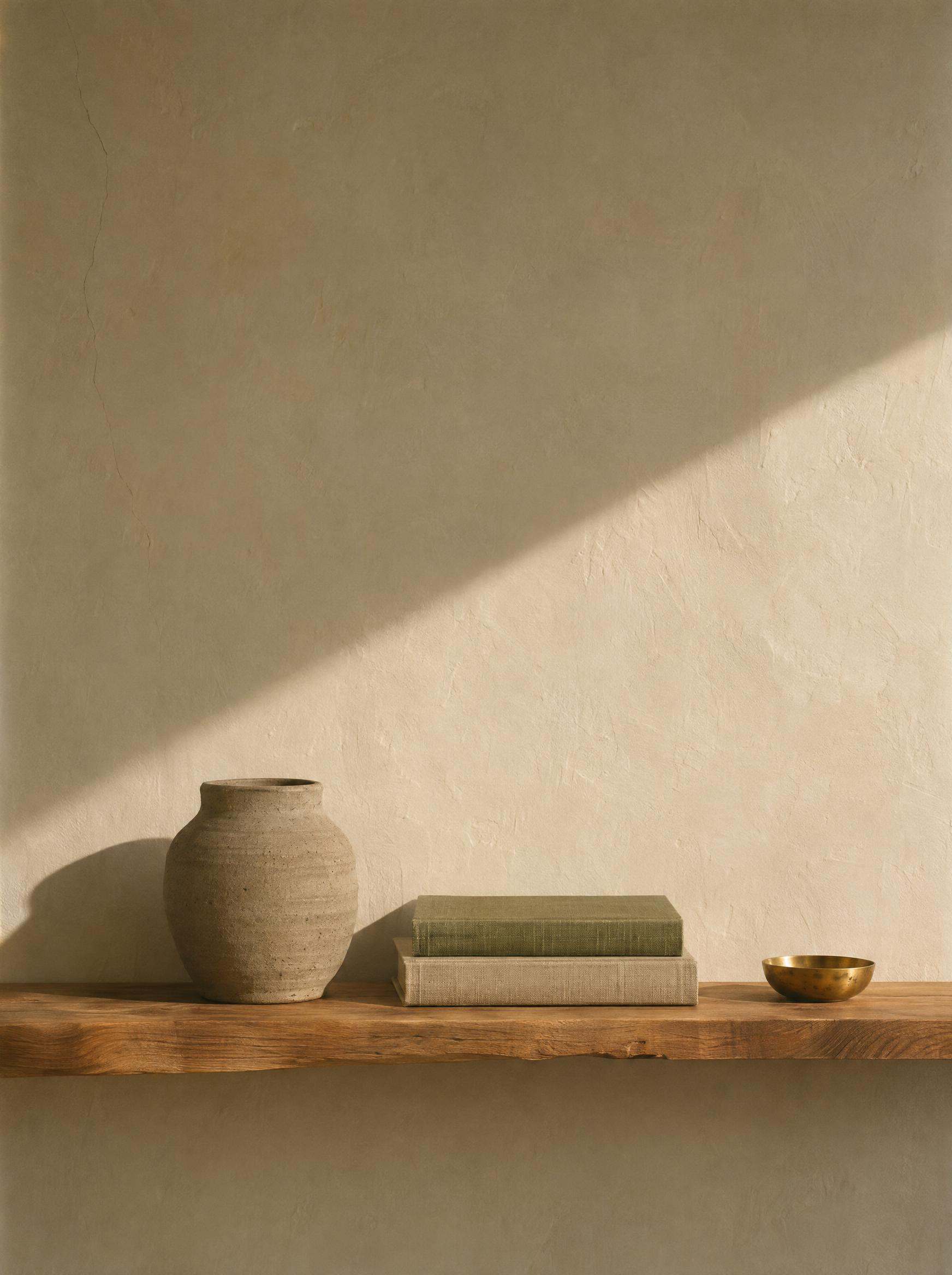
Put back only what you use there or want to look at there. Three things on a shelf can each be seen. Twelve become a texture. The space around an object is what lets it read as chosen.
Then live with it for a fortnight before doing the next one. The point is to notice whether the room is easier to be in, not to finish.
Buying less often, and more slowly
The most effective edit happens before a purchase. A few questions are worth asking — none of them clever:
- What will this replace? If the answer is nothing, where will it live?
- Would I still want it in a month? Writing it down and waiting is free.
- Can it be repaired, refilled or washed? Things that can be maintained tend to stay.
- Is it for the life I have? Equipment for a hobby you intend to start is the most common exception to every rule above.
This is not an argument for expensive things. A considered object can be cheap. It is an argument for the pause — for letting a purchase be a decision instead of a reflex.
What to keep
Keep the things that are a little worn because they are used. Keep what was given to you by someone who matters, even if it matches nothing. Keep the odd object that makes the room yours.
A home with less in it is not a prize for restraint. It is a room in which the things you chose are easier to find, easier to look after and easier to enjoy. That is all the idea asks for, and it is enough.